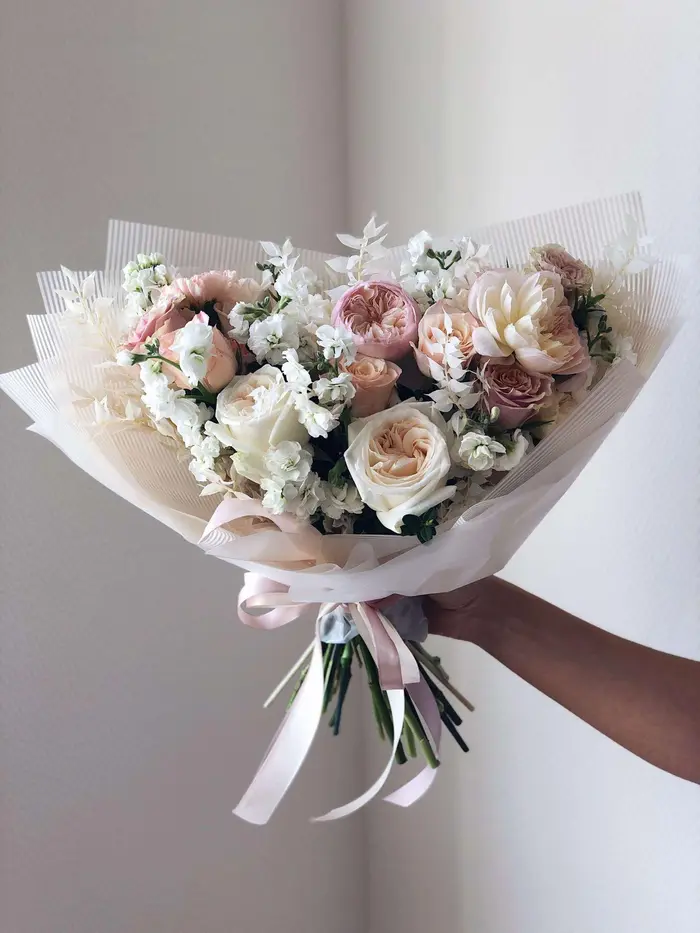
Fresh ranunculus in Dubai
Ranunculus
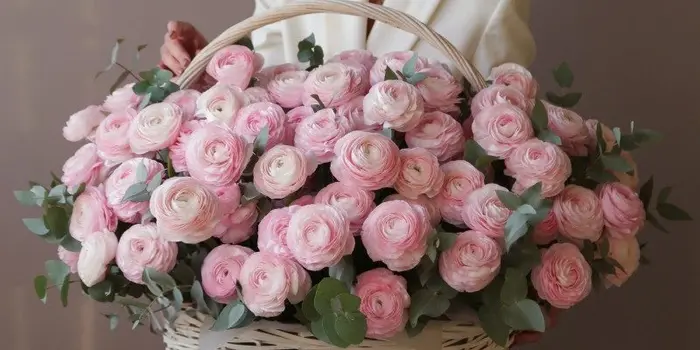
Ranunculus are a cool-season flower: late autumn to late spring, peaking in winter. Dozens of tissue-thin petals on a soft, hollow stem that keeps growing and leaning in the vase.
From roses and peonies to seasonal favourites — every flower has its own page, with same-day delivery across Dubai.
What to know before you buy ranunculus in Dubai: when the season runs, which colours exist, and how an order reaches the door.
Every bouquet is put together here by hand, not lifted ready-made off a shelf. Choose a bouquet, a box or a mono bouquet in the shop — each product shows its price — and you can order ranunculus online at any hour.
The order is finished on the site, not in a chat — though WhatsApp (+971 54 396 9669) is still the place for questions. You confirm it in the cart and an order number comes straight back, with a page showing where that order has got to. A florist then calls to agree the time. Payment is settled either up front, by card on a secure Stripe page, or on delivery — cash or card to the courier.
Yes, if you catch us before 18:00. After that it is a photo of the finished bouquet and then the courier: ranunculus delivery runs across Dubai until 20:00, and out to Sharjah and selected areas of Abu Dhabi.
A bud that arrives soft and already showing colour is not a fault — fresh ranunculus often travel like that, and it will open far wider than it looks. The studio is open 10:00–20:00 daily, and online orders are taken around the clock.
Three things: the variety, the number of stems and where you are in the season. Dense doubles carrying a hundred petals or more cost more than a simpler single head, and a bouquet made at the February peak is not priced like one built at the thin end of the season.
The price sits on each product in the shop. For a size that is not listed, send the florist your budget on WhatsApp and we will say what it buys that week.
They grow from a small clawed tuber planted in autumn, which is why fresh ranunculus appear from November and run through to April. The densest doubles — a hundred petals or more to a head — land in February and March; by late spring the stems shorten and the heads come smaller.
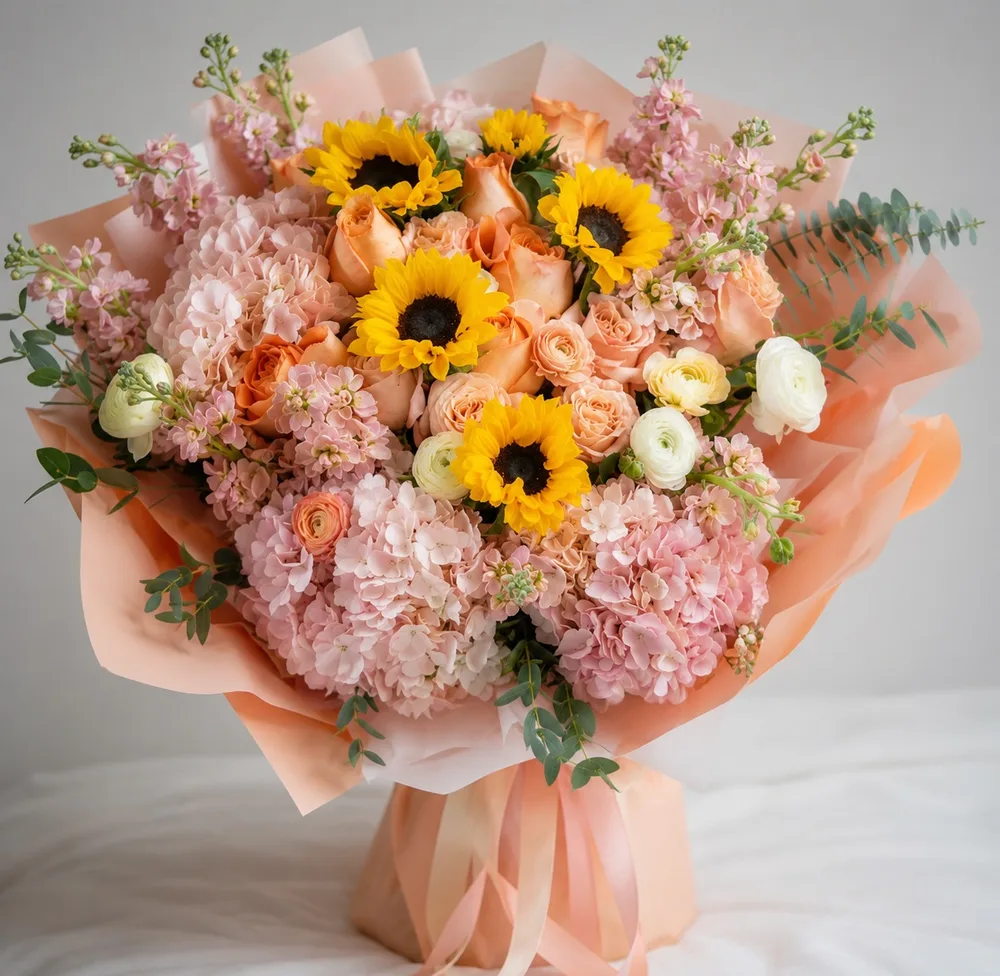
The range is wide: cream, butter yellow, apricot, coral, raspberry, a burgundy dark enough to read as black, and picotee types with each petal outlined in a darker shade. There is no true blue.
Thirst, not age. The stem is hollow and soft, so recut two centimetres at a slant with a sharp blade — one crushed by scissors barely drinks — and stand it in deep fresh water. Caught the same day, the head usually lifts.
The petals are thin enough to see light through and register dry air long before the stem does: in the path of an air-conditioning vent the edges go papery while the bud still looks full. The stem also keeps growing and leaning, so the shape shifts.
They are effectively unscented, which makes them one of the easier flowers for a desk or a dining table, where perfume competes with the room or the food.
The catch is the family: buttercups are mildly toxic if chewed, so keep the vase away from a cat or dog that samples flowers. Fallen petals are the part people forget — they land under the vase, which is exactly where a cat finds them.